Sole full-stack engineer & designer · 2025
Orbit — SaaS issue tracker
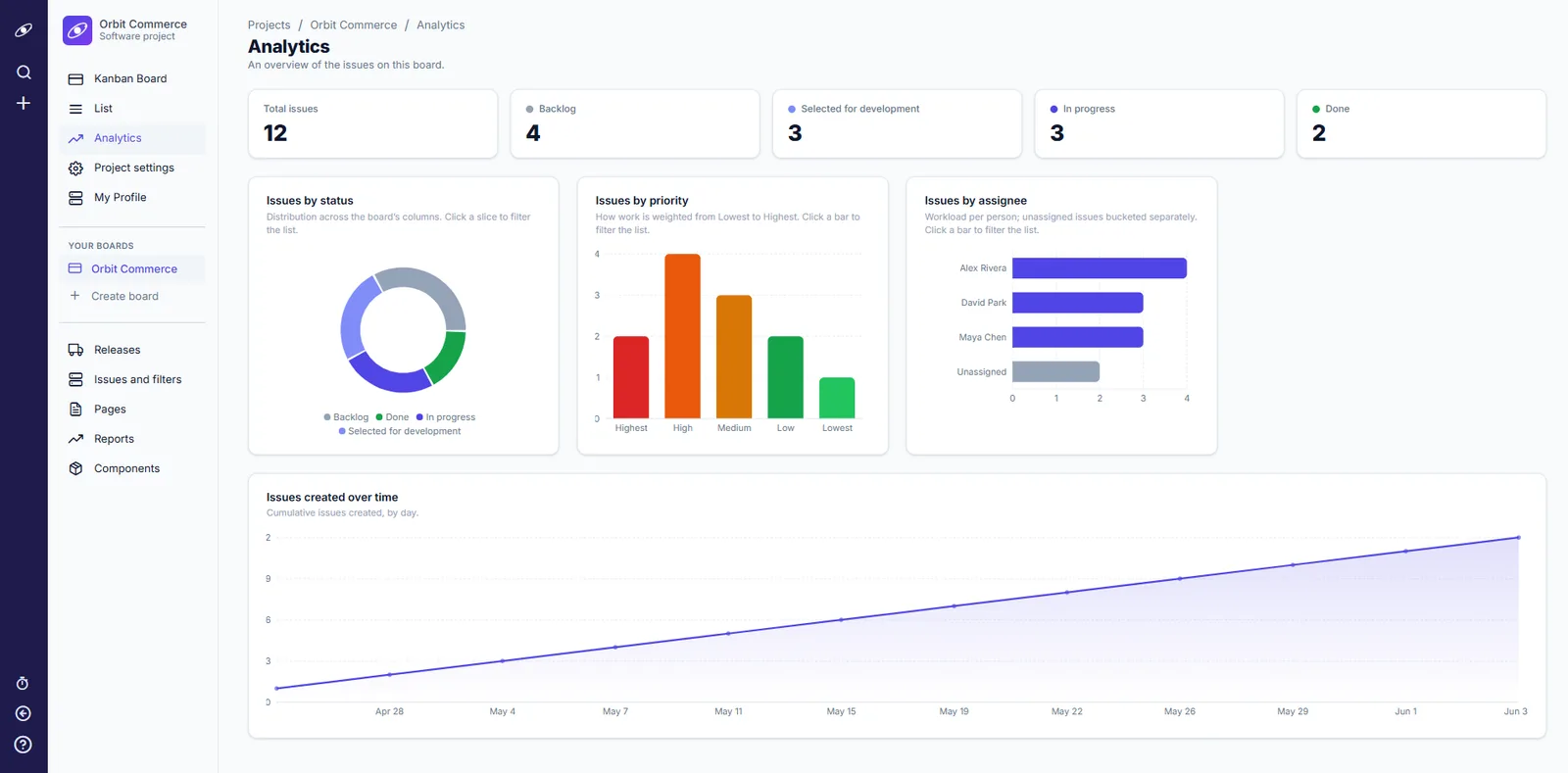
A production-grade issue tracker built solo from schema to UI: drag-and-drop Kanban with optimistic updates, a filterable table view, an analytics dashboard, guided onboarding, real auth, and an AI assistant that breaks vague tasks into concrete subtasks.
- React
- Express
- Node.js
- TypeScript
- PostgreSQL
- TypeORM
01
Context
Issue trackers are a crowded, well-understood category — which is exactly why I picked one. When the domain is familiar, there is nowhere for sloppy execution to hide: state synchronization, drag-and-drop ordering, filtering, auth, and onboarding all have to work the way people expect from tools they use every day.
Orbit was built solo, end to end. Every architecture, backend, frontend, and design decision was mine to make — and mine to live with when it turned out to be wrong.
02
What I built
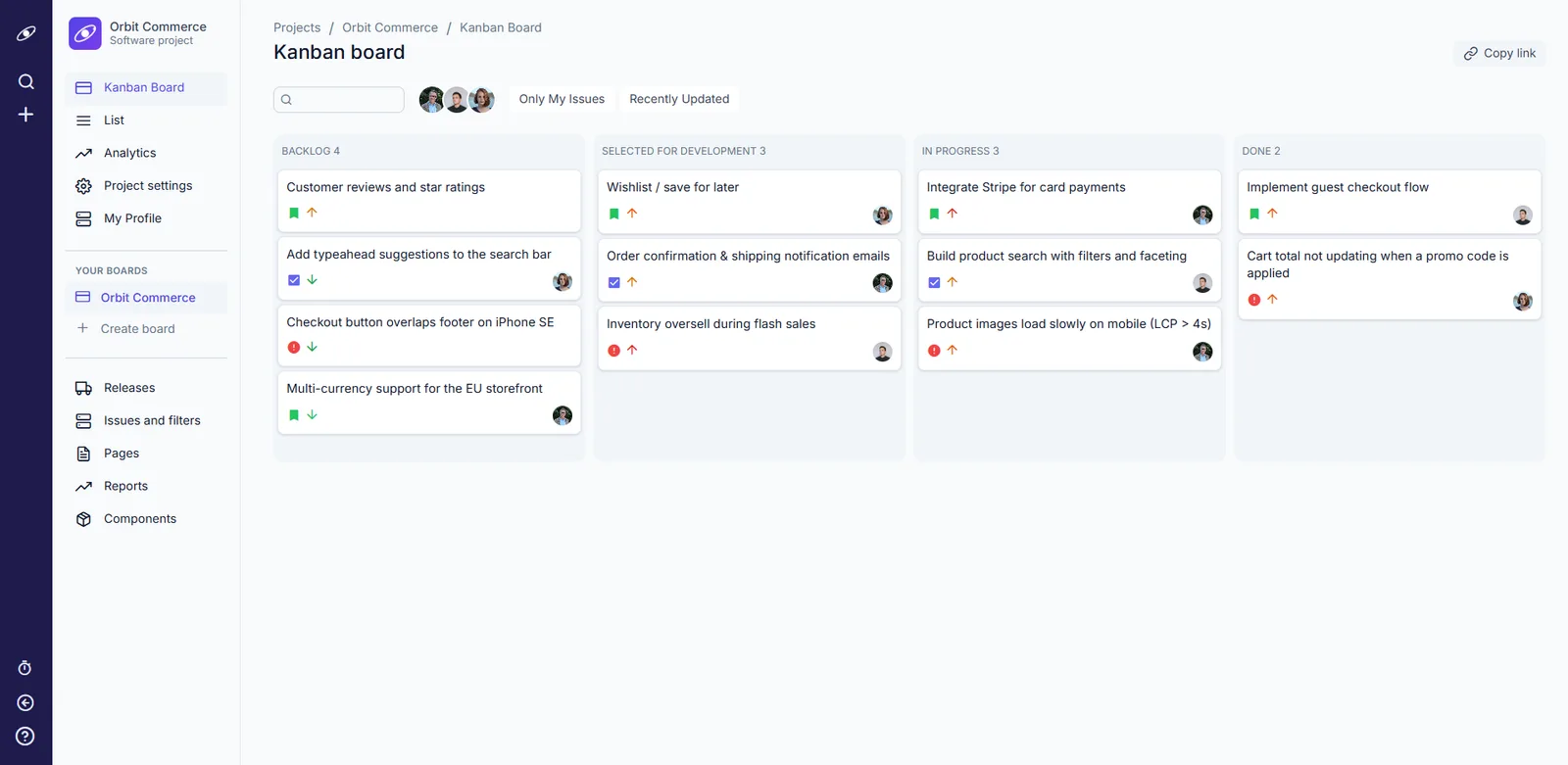
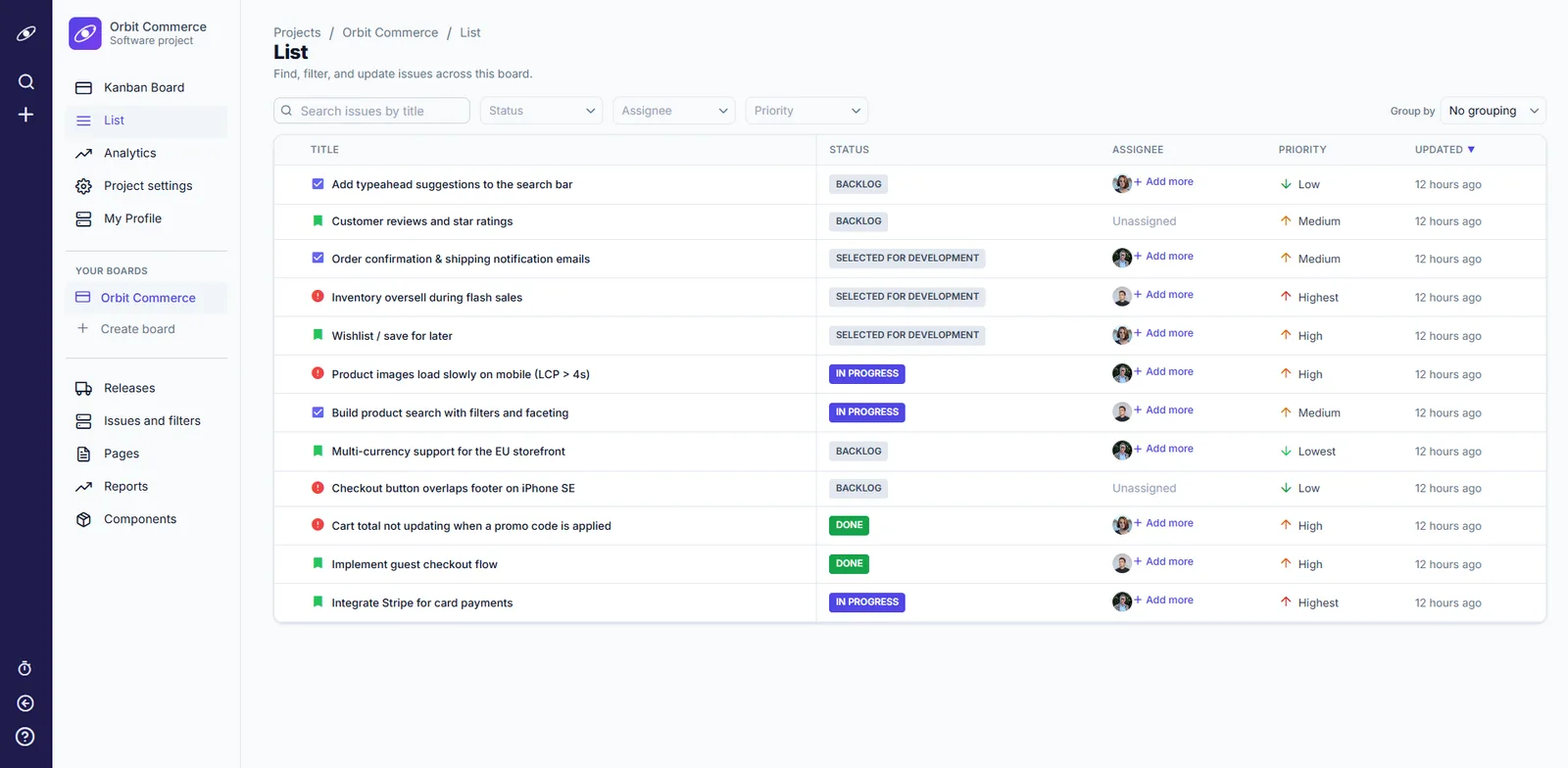
Teams plan work on a drag-and-drop Kanban board and can flip to a filterable table view of the same data. An analytics dashboard tracks progress over time, and a guided onboarding flow takes a new user from an empty workspace to a working board. Authentication and authorization are real, not stubbed.
The AI feature turns a vague one-line task into concrete, actionable subtasks. It is scoped deliberately: an assistant inside the planning workflow, not a chatbot bolted on beside it.
03
Technical decisions
The board is optimistic end to end: mutations update the UI immediately and reconcile with the server afterward, so dragging a card never waits on a round trip. The cost of that choice is that every mutation needs a rollback path for when the server disagrees — most of the board's complexity lives there, not in the drag-and-drop itself.
Data lives in PostgreSQL behind TypeORM, with a relational model shaped around the three read patterns that matter: the board, the table view, and the analytics rollups.
The AI breakdown is treated like any other production feature: model output is parsed and validated into real subtask records before anything touches the database, and failure degrades gracefully instead of blocking the flow.
04
Outcome
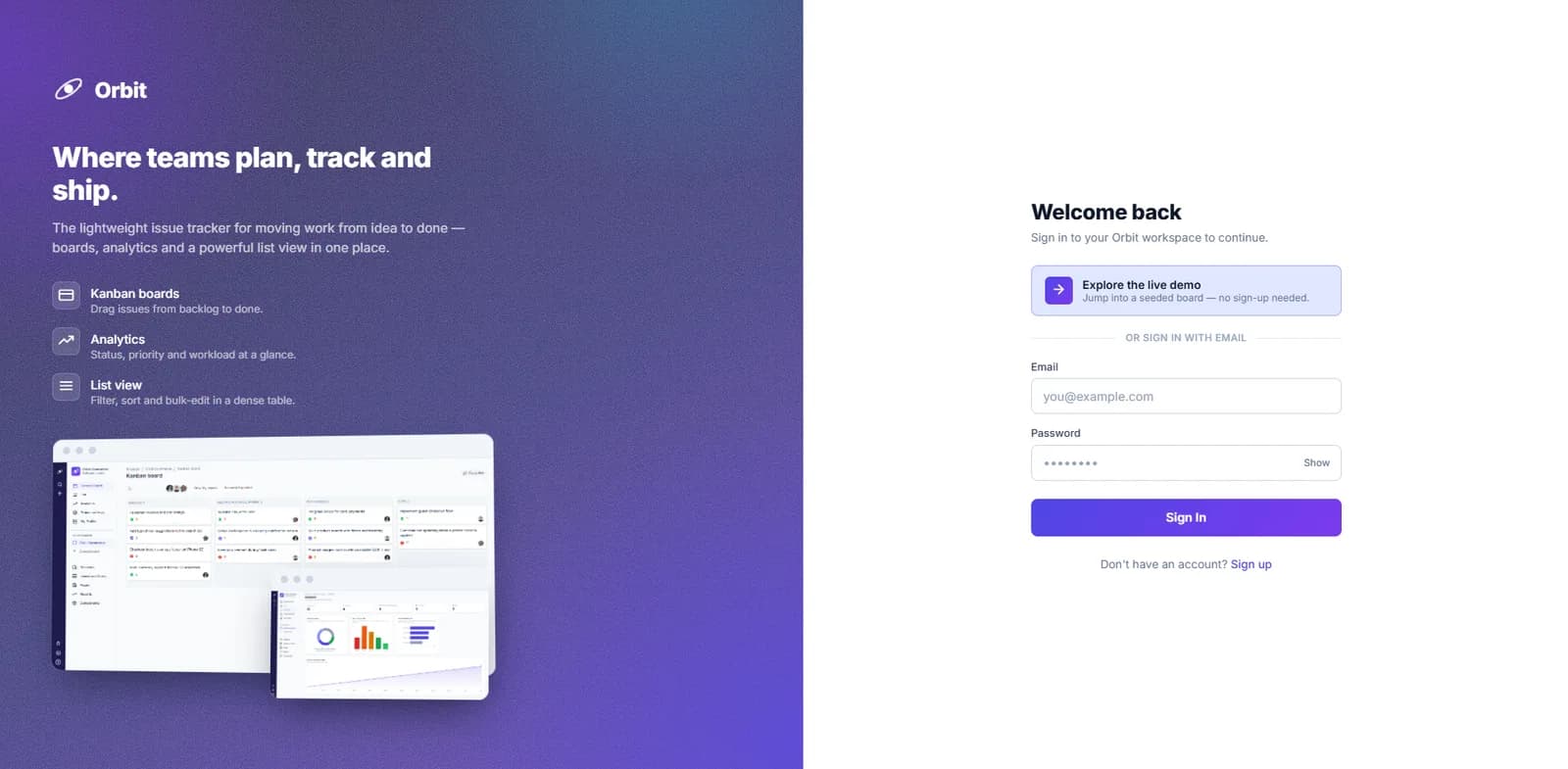
Orbit is deployed and live — the sign-in page offers a seeded demo workspace, so you can explore the board without creating an account. As a solo project, its value is demonstrating the part of product engineering that demos skip: the integration seams and edge cases where real products either hold up or fall apart.